
Winter Inversions, Indoor Humidity, and Mold in Ogden Homes
During Wasatch Front winter temperature inversions, cold valley air traps particulate pollution outside while Ogden homeowners seal homes airtight. Trapped daily humidity elevates indoor relative humidity above 50%, triggering aggressive condensation on cold windows, exterior wall studs, and attic roof sheathing, fostering hidden toxic mold. Call Ogden Mold Removal Solutions at (866) 688-0301 for professional moisture and mold assessment.
The Meteorology of Wasatch Inversions and Indoor Air Traps
Every winter between December and February, Northern Utah experiences intense meteorological phenomena known as atmospheric temperature inversions. Dense, sub-freezing air pools along the valley floor between the Great Salt Lake and the sheer western face of the Wasatch Mountains. High-pressure ridges settle overhead, acting like an invisible thermodynamic lid that traps cold, stagnant air below 4,500 feet elevation across Weber and Davis counties.
While public attention focuses almost exclusively on outdoor particulate pollution (PM2.5) that turns the sky a hazy grey, the most significant immediate biological health hazard occurs inside residential living spaces. To protect against toxic smog and frigid Wasatch canyon winds, Ogden homeowners seal weatherstripping, install plastic window wraps, close fireplace flues, and keep doors tightly shut. While effective at excluding outdoor soot, this airtight containment traps vast quantities of internally generated water vapor, converting modern and historic homes into unventilated biological incubators.
Psychrometrics of Winter Moisture: The Dew Point Physics
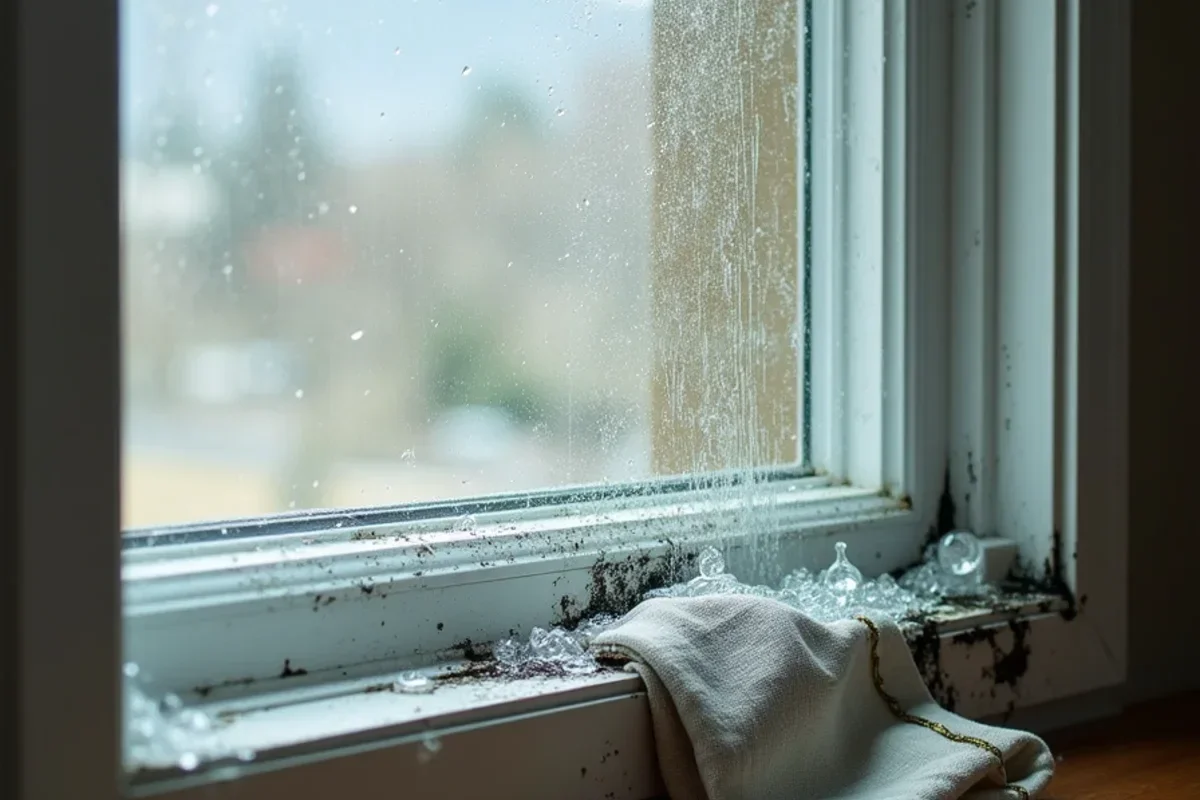
A typical family of four in Ogden generates between 2.5 and 4.0 gallons of liquid water vapor each day purely through routine domestic activities: showering, cooking, breathing, washing dishes, drying laundry, and running whole-home furnace humidifiers. In warm, summer conditions, this airborne moisture readily vents outward. In winter, however, thermodynamics dictates that warm, moisture-laden indoor air migrates relentlessly toward cold exterior building boundaries through diffusion and air exfiltration.
When warm indoor air contacts any surface cooled below its dew point temperature, the air loses its capacity to hold water vapor, and moisture condenses out as liquid water droplets. The colder the outdoor temperature, the lower the indoor relative humidity must be maintained to prevent condensation:
| Outdoor Air Temperature | Max Recommended Indoor RH (at 70°F) | Window Surface Temp (Double Pane) | Condensation & Mold Risk Level |
|---|---|---|---|
| Above 40°F (Mild Winter) | 45% – 50% RH | 54°F – 58°F | Low Risk: Minimal sill condensation; standard ventilation suffices. |
| 20°F to 39°F (Typical Ogden Winter) | 35% – 40% RH | 44°F – 50°F | Moderate Risk: Window perimeter pooling; corner closet moisture. |
| 0°F to 19°F (Cold Inversion Snap) | 25% – 30% RH | 35°F – 42°F | High Risk: Heavy glass streaming, wall stud ghosting, drywall saturation. |
| Below 0°F (Severe Alpine Freeze) | 15% – 20% RH | 28°F – 34°F | Extreme Risk: Interior ice formation on frames, attic hoarfrost accumulation. |
The Four Primary Inversion Mold Hotspots in Ogden Homes
Condensation during winter inversions is rarely uniform. It concentrates in four distinct structural micro-climates where thermal resistance is lowest and air circulation is stagnant:
- 1. Double-Pane Window Sills and Sashes: Glass panes and aluminum or vinyl frame spacers lack high thermal resistance (R-values). Warm indoor air condenses against window panes, pooling along lower wooden sills and running down behind drywall returns, rotting window jambs and breeding black Cladosporium and Aureobasidium colonies.
- 2. Exterior Wall Stud Thermal Bridging ("Ghosting"): In older homes across Ogden, Roy, and South Ogden framed with 2x4 lumber and degraded fiberglass batts, solid wooden wall studs conduct exterior cold directly to interior drywall surfaces. Dark, vertical streaks of condensation and fine mold dust form directly over stud lines on exterior-facing walls.
- 3. Exterior Corner Closets and Behind Furniture: Walk-in closets on exterior building corners or wall expanses blocked by large headboards, dressers, or heavy couches have zero warm air circulation. Ambient surface temperatures drop dramatically, causing clothing, shoes, and drywall to develop fuzzy white and green Aspergillus colonies.
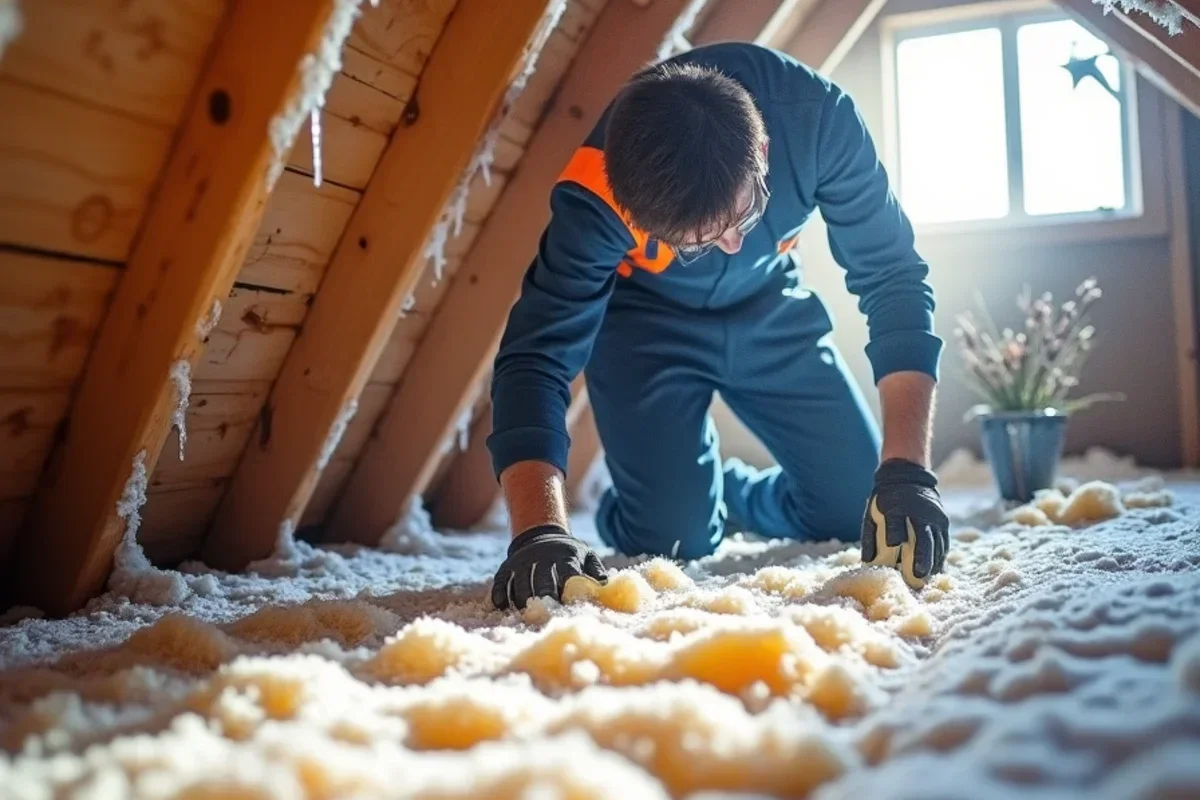
- 4. Attic Roof Sheathing via the "Stack Effect": Buoyant warm indoor air escapes into unconditioned attics through bypasses—recessed can lights, plumbing vent stacks, and unsealed pull-down attic stairs. In sub-freezing weather, this moisture freezes into thick hoarfrost on the underside of OSB or plywood roof decks. When sunny afternoons warm the shingles, the frost melts, dripping onto ceiling insulation and triggering widespread roof deck mold blooms.
The Inversion Dilemma: Smog Outside vs. Bio-Contaminants Inside
Homeowners face a frustrating paradox during Northern Utah winter inversions. Opening windows to ventilate excess humidity introduces hazardous concentrations of PM2.5 particulate soot, ammonium nitrate, and woodsmoke from the valley's stagnant inversion layer. Conversely, remaining completely sealed traps elevated carbon dioxide, chemical off-gassing, microbial volatile organic compounds (mVOCs), and airborne fungal spores released by growing window and attic colonies.
To break this deadlock, indoor environmental specialists recommend engineered mechanical ventilation strategies rather than passive window opening. Installing a Heat Recovery Ventilator (HRV) or Energy Recovery Ventilator (ERV) continuously exhausts stale, humid indoor air while drawing in fresh outdoor air through high-efficiency MERV 13 or HEPA filtration media, transferring heat from the exhaust stream to the intake stream without exchanging moisture.
Vapor Pressure Differentials and Attic Stack Effect Physics
To understand why winter mold is so relentless across the Wasatch Front, building scientists analyze vapor pressure differentials. During a December inversion in Weber County, outdoor ambient air at 25°F and 70% relative humidity holds very little total moisture mass—only about 14 grains of moisture per pound of dry air (GPP). Inside a heated Ogden residence maintained at 70°F and 50% RH, the air carries approximately 55 GPP. This dramatic moisture disparity generates an outward vapor pressure gradient of nearly 0.25 pounds per square inch.
Under this continuous thermodynamic driving force, water vapor migrates outward through porous gypsum drywall and unsealed electrical ceiling boxes. Driven by the "stack effect"—the natural buoyancy of warm indoor air rising toward the highest point of the structure—moisture floods into the attic envelope. If an unconditioned attic has adequate soffit and ridge ventilation, this vapor is swept outside. However, in many older homes throughout Ogden and South Ogden, soffit vents are blocked by retrofitted fiberglass insulation or lacks sufficient net free ventilating area (NFVA). The trapped vapor freezes directly against icy roof sheathing, converting the entire roof structure into an ice sheet that melts and fosters massive mold blooms upon the first winter thaw.
HVAC Filtration and Mechanical Ventilation Engineering
Managing indoor air during inversions requires optimizing central HVAC filtration and mechanical air exchange. Many homeowners upgrade to high-efficiency MERV 13 or MERV 16 furnace filters to catch outdoor inversion soot. While commendable for particulate capture, dense media filters create significant static pressure drops across older furnace blower motors, reducing overall air volume and causing room air stagnation that accelerates corner condensation.
Restoration engineers recommend pairing balanced MERV 11 filtration with dedicated mechanical ventilation systems such as Heat Recovery Ventilators (HRVs). HRVs extract stale, moisture-saturated air from bathrooms and laundry rooms while drawing in cold, dry outdoor air through dedicated pre-filters, recovering up to 80% of sensible heat without introducing outdoor soot or letting humidity climb into the danger zone. For finished basements prone to cold floor pooling, deploying a low-temperature commercial dehumidifier equipped with hot-gas bypass defrost ensures continuous humidity control even in ambient temperatures below 60°F.
Actionable Protocols: Balancing Winter Humidity and Air Quality
To safeguard your Ogden property from winter inversion condensation and microbial blooms, implement these verified engineering and lifestyle controls:
- 1
Deploy Calibrated Digital Hygrometers
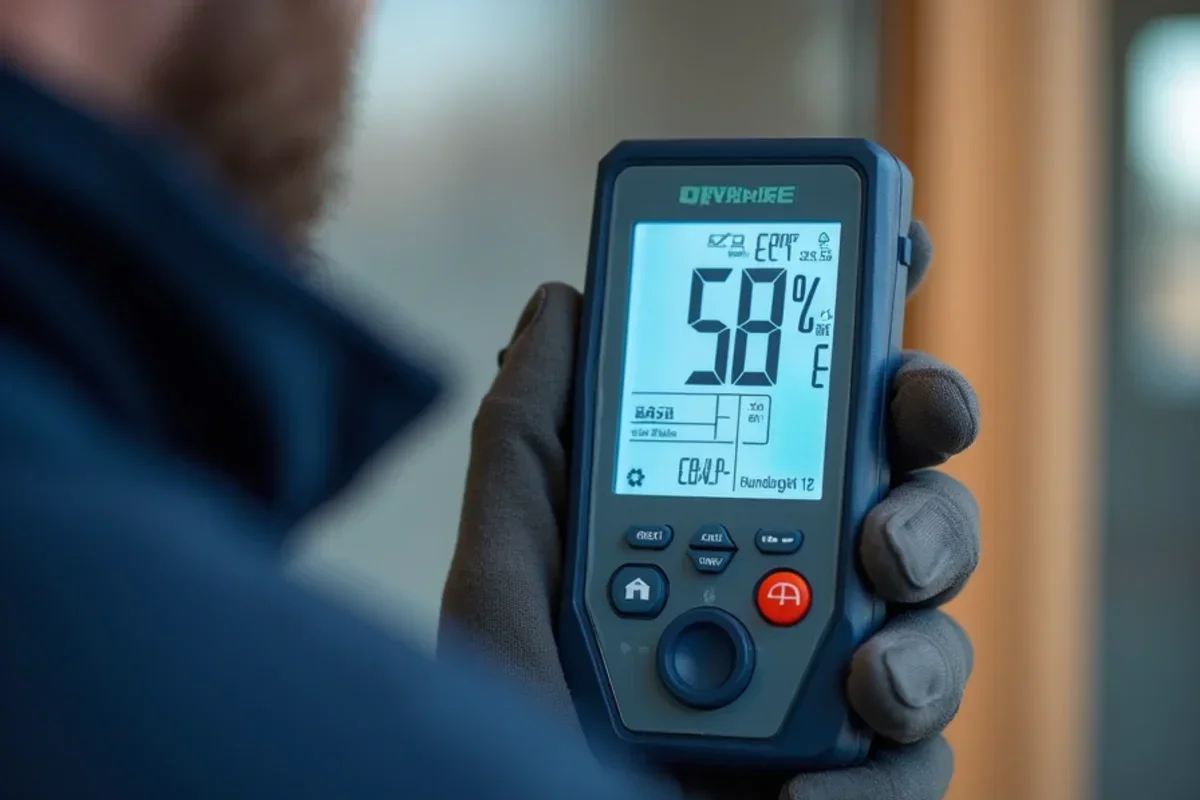
Place digital hygrometers in bedrooms and basements. Keep indoor relative humidity between 30% and 38% throughout winter, never exceeding 40% when outside temperatures drop below freezing.
- 2
Regulate Whole-Home Furnace Humidifiers
Dial back or turn off bypass and steam humidifiers on central HVAC systems during severe cold inversion spells. Combat dry skin with topical lotions rather than oversaturating structural framing.
- 3
Mandate Dedicated Exhaust Fan Runtime
Run kitchen range hoods ducted outdoors during all cooking, and operate bathroom exhaust fans during and for at least 20 to 30 minutes following showers. Verify that fan ducts discharge completely through the roof or exterior soffit, never into the attic.
- 4
Promote Perimeter Furniture Air Circulation
Pull beds, sofas, and large bookshelves at least two to three inches away from exterior-facing walls to allow convective warm air flow. Leave exterior closet doors slightly ajar to prevent cold air stagnation.
- 5
Wipe Morning Window Condensation Immediately
If morning window streaming occurs, wipe glass and wooden sills immediately with microfiber towels to prevent water from wicking into gypsum drywall returns and baseboard millwork.
24/7 Water Damage Emergency? We Are on Call Right Now
Speak directly with our Ogden restoration dispatchers. We arrive within the hour across Weber County with industrial water extraction pumps and rapid structural drying equipment.
- 5★ on Google (4 reviews)
- 24/7 Live Dispatch
- 60-Min Emergency Arrival
- Fully Insured
- Free Assessments
- Serving Ogden & Northern Utah since 2023
Frequently Asked Questions
- When outdoor temperatures along the Wasatch Front range between 15°F and 32°F, indoor relative humidity should be maintained strictly between 30% and 38% at 70°F indoor temperature. Allowing humidity to climb above 45% creates heavy window condensation and fosters toxic mold growth.